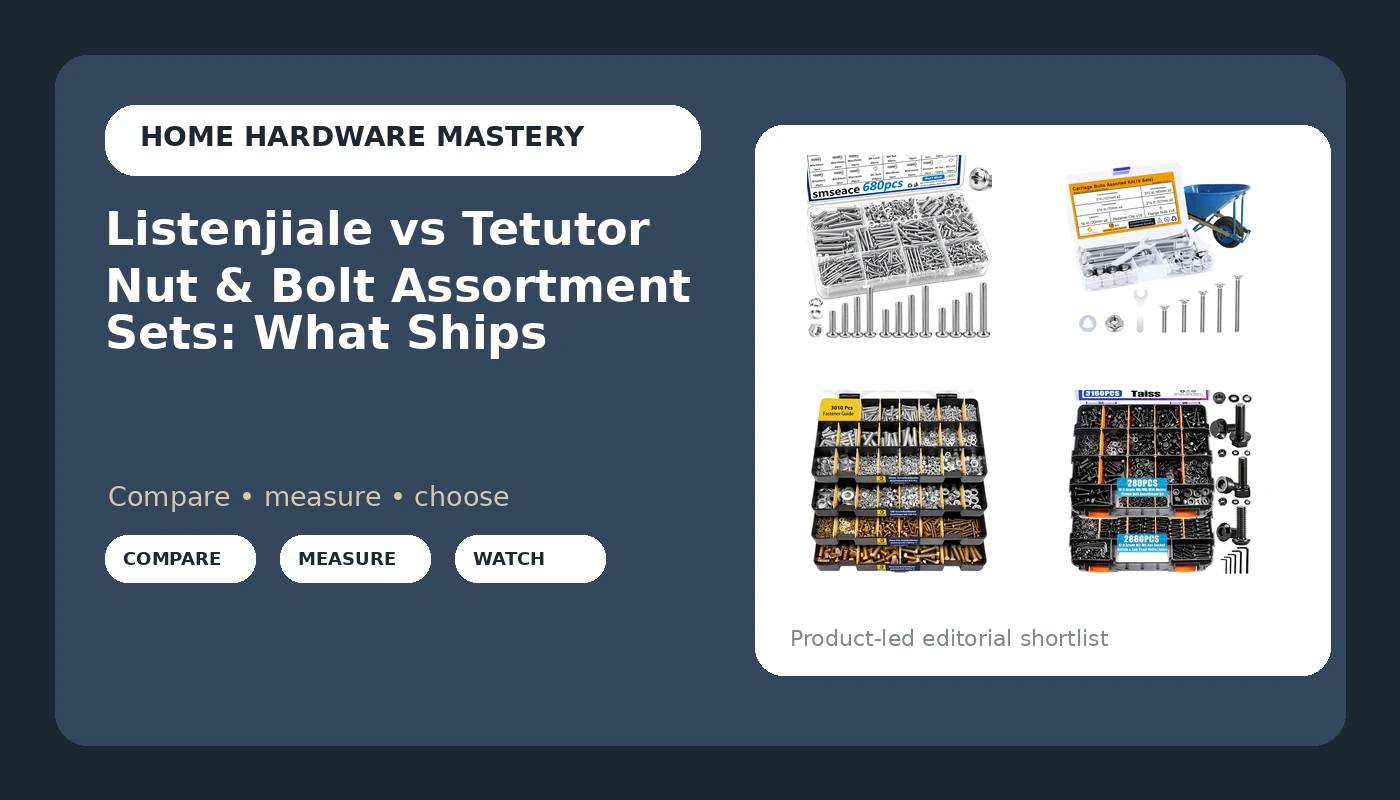
I keep a shelf in the shop for hardware that failed, and each part on it is labeled with what gave out first: a stamped hinge knuckle, a drawer slide screw that pulled out of particleboard, a gate latch that froze in February. Fastener kits land on that shelf more often than they should, because most of them are sold by piece count and bought by people who never checked a thread pitch. The search that brings a lot of readers to this page, listenjiale vs tetutor nut & bolt assortment sets, is really a question about what is inside the box and whether the hardware in it is graded or generic. What follows is a nut & bolt assortment sets comparison of four kits whose listings actually state their counts, sizes and grades, and I will say plainly which one earns bench space.
For a home shop that wants one box for furniture, brackets and machine repair, the 3010-piece grade 8.8 kit is the pick. If you want the least expensive useful metric assortment for a drawer, the 680-piece kit does that job, and the Taiss kit is the one to buy when you need socket head screws down to M2.
None of the four is a stainless kit, and none is an imperial assortment beyond the wheelbarrow part, so set those expectations before you read the table.
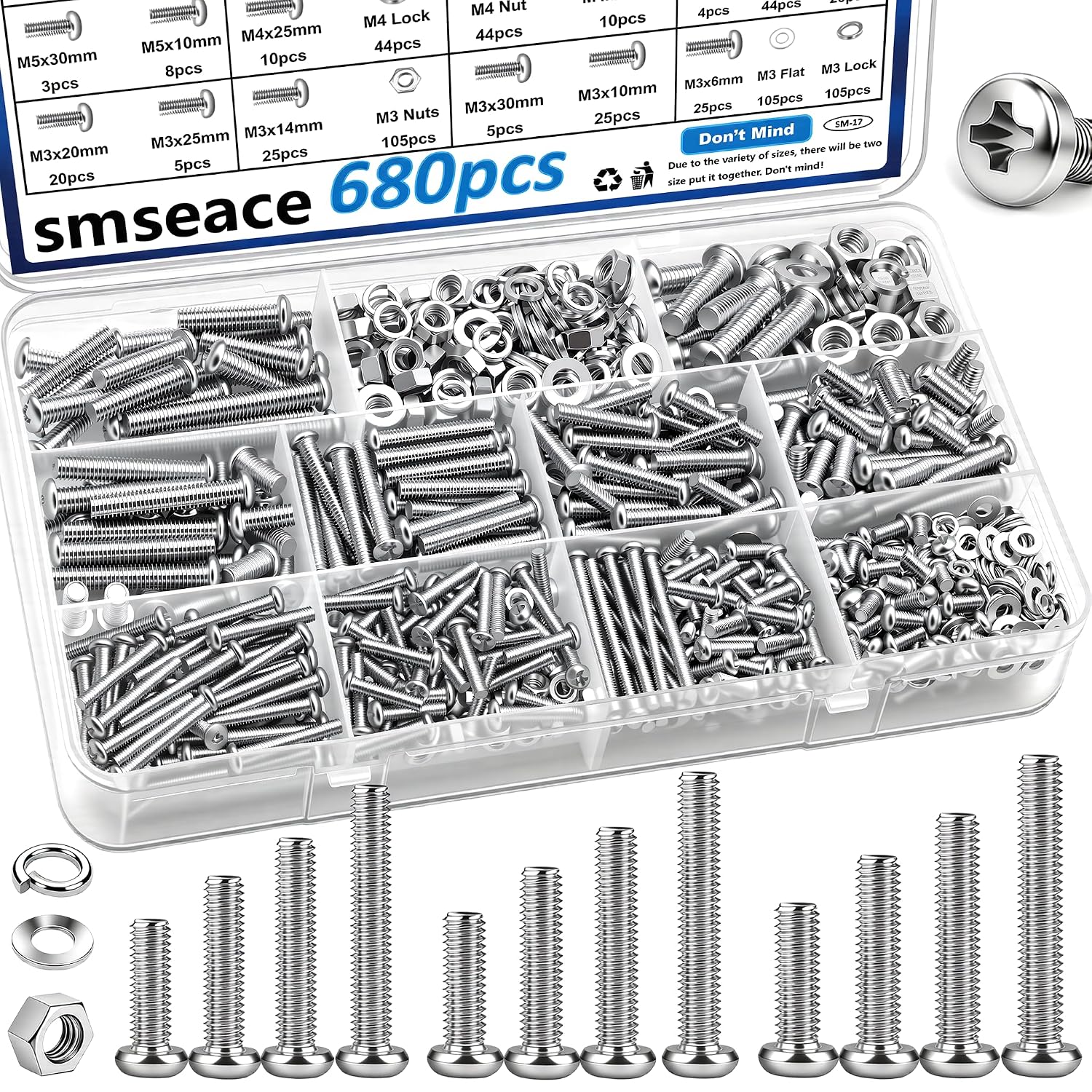
680Pcs Nuts and Bolts Assortment Kit 27-Sizes M3/M4/M5/M6 Nut Bolt Washer Assortment Kit
Covers M3 through M6 with nuts and washers in one small case; the cheapest way to answer a missing-screw problem
No grade stated, so treat it as light duty; shallow counts per length
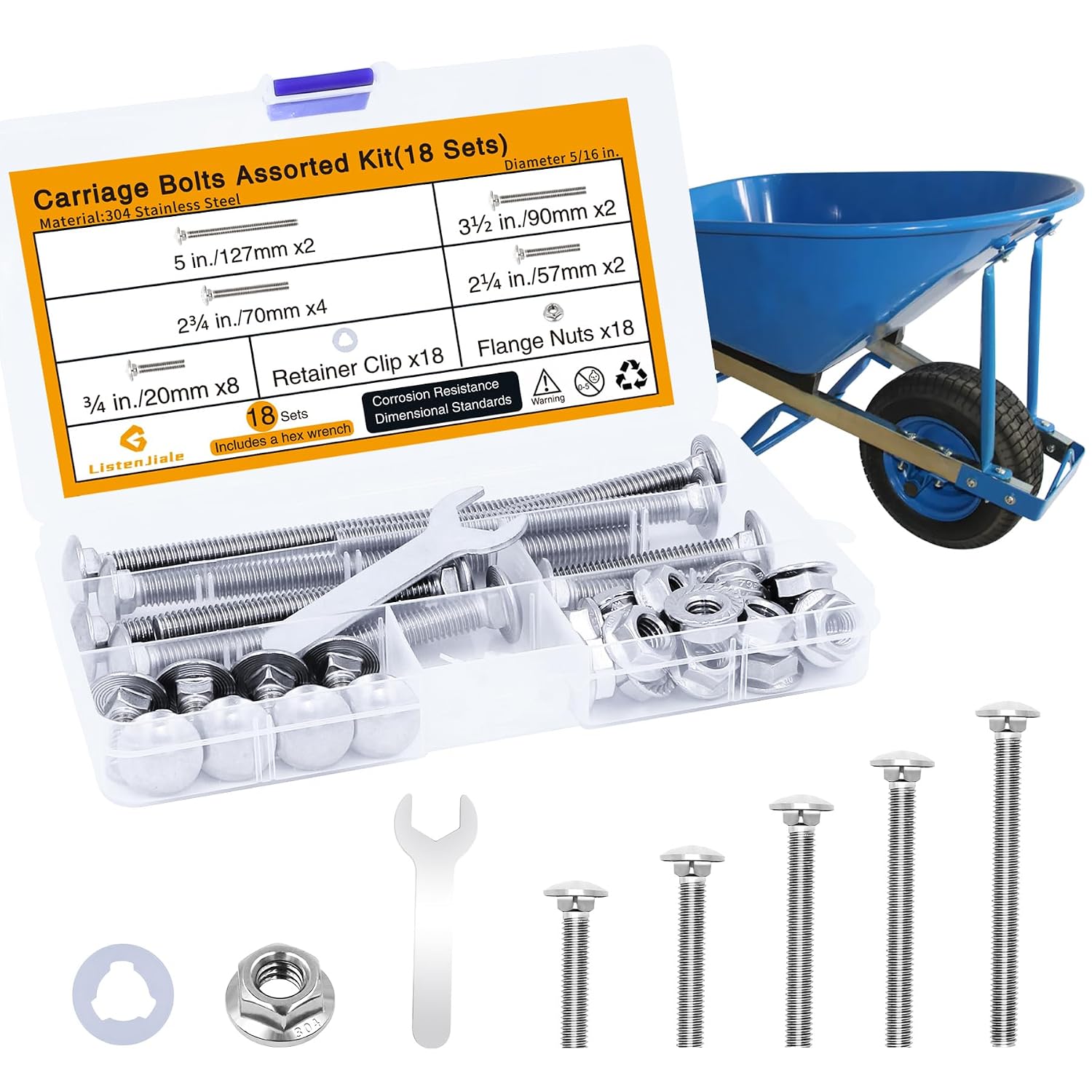
Wheelbarrow Carriage Bolts and Nuts Kit, 18 Sets 5/16-18 Wheelbarrow Parts
18 matched 5/16-18 carriage bolt and nut sets for the exact repair that strands a wheelbarrow
One imperial thread only, no crossover to a metric kit; 18 sets is more than most repairs use
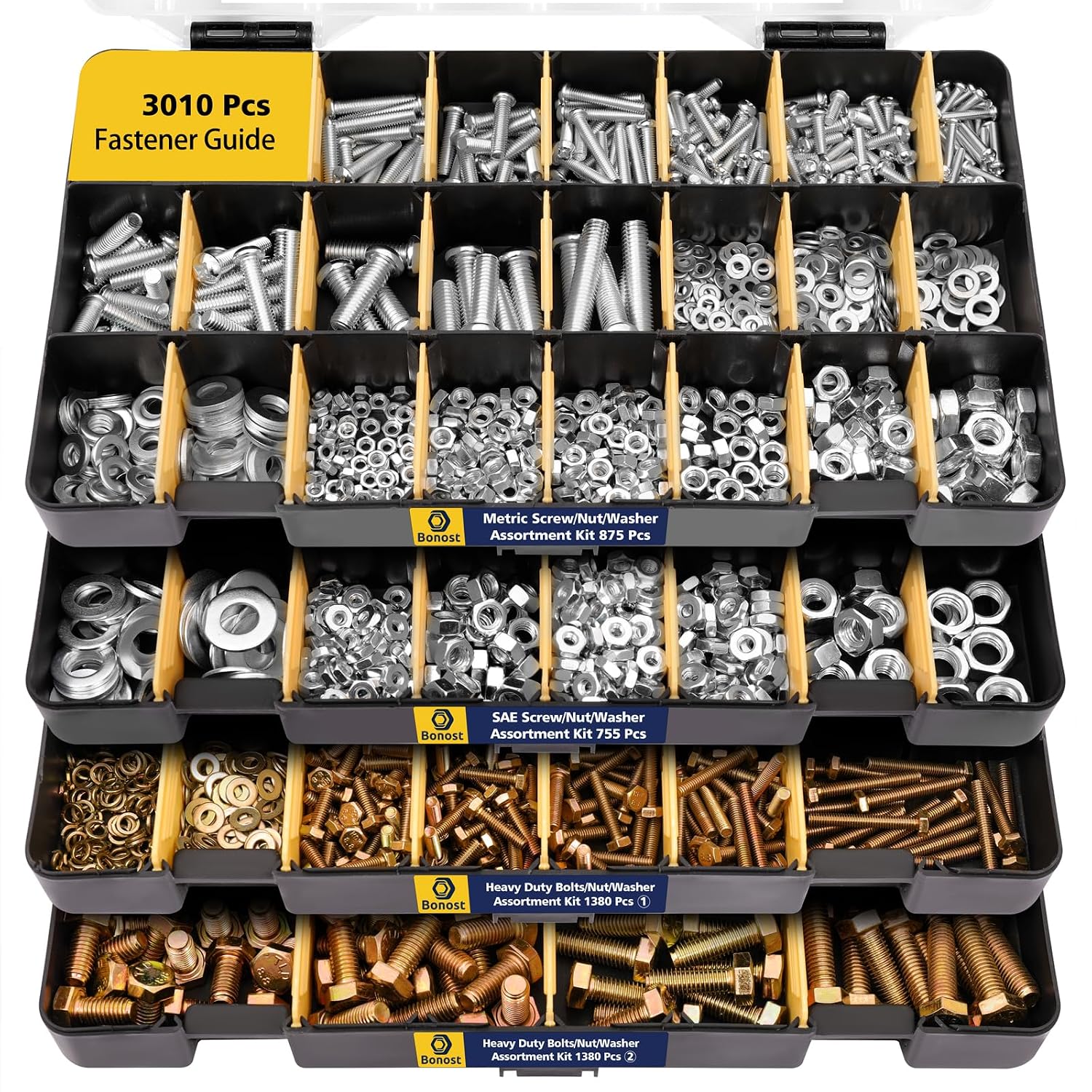
3010pcs Nuts and Bolts Kit with Grade 8.8 Metric Hex Bolts, 4 Trays
Class 8.8 metric hex bolts in four lift-out trays, the format that survives a working shop
Size count is not in the title, so you have to read the compartment photos
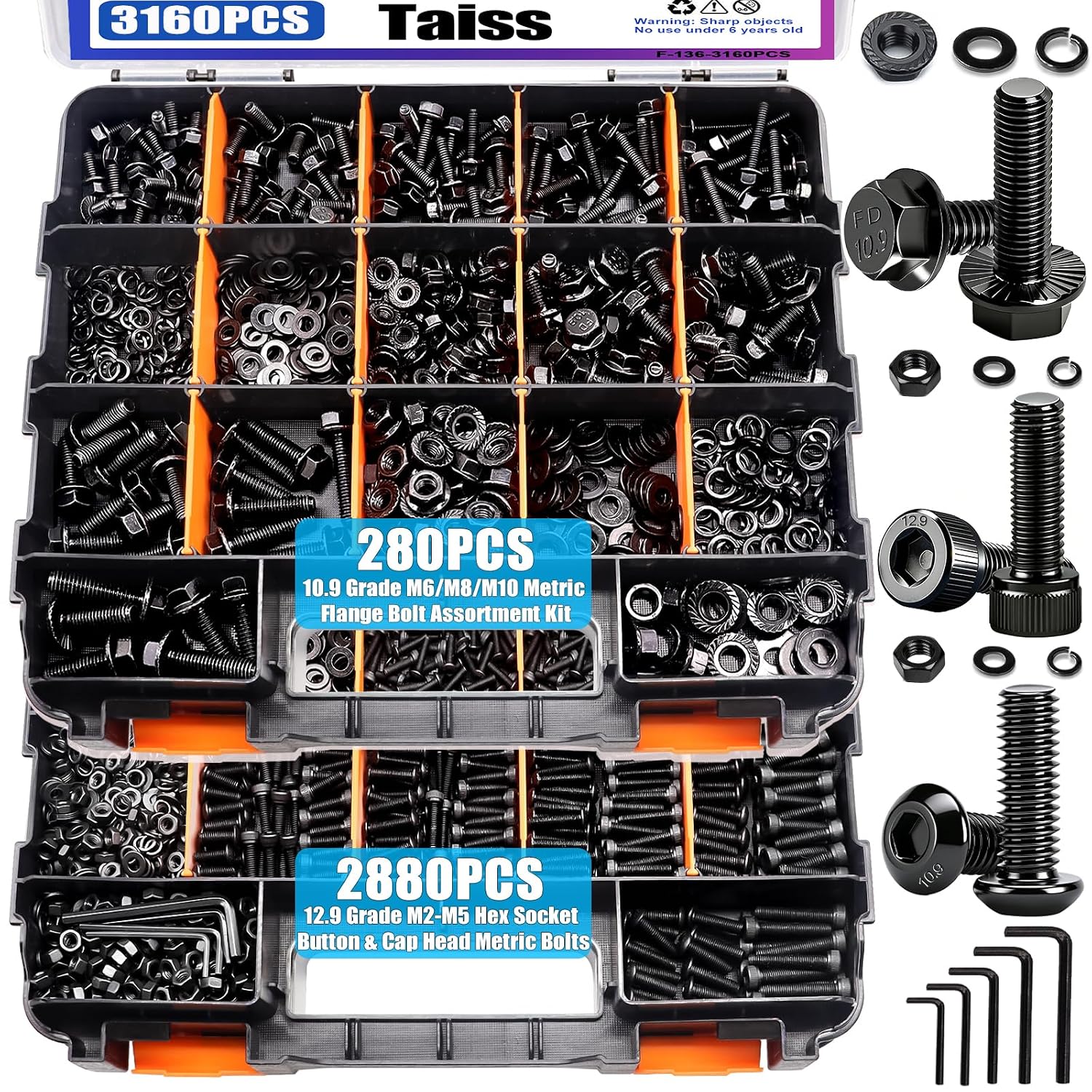
Taiss 3160PCS Metric Flange Bolt Assortment Kit, 42 Sizes Hex Socket Button & Cap Head Metric Screw
42 sizes from M2 to M10, class 10.9, socket heads for tight spots; the deepest size list here
Thin pieces per size at the long lengths; black zinc is an indoor finish
Prices and availability may change.
What each of the four kits actually contains
Piece count is the number sellers lead with because it is the easiest one to inflate. The number that matters is pieces per size, and you can estimate it from what the listing tells you.
The 680-piece kit spreads 680 pieces across 27 sizes in M3 through M6, with nuts and washers inside that count. If the split were even, that is roughly 25 pieces per size, and every washer in the box pushes the bolt count per length down. What you are buying is a drawer kit: enough to reattach a hinge plate, hang a shelf bracket or replace the bolts on a mower handle, and not enough of any single length to run a project that needs forty of them.
The 3010-piece kit moves up a grade and changes the format. It is grade 8.8 metric hex bolts in four trays. Two things matter there. A tray you can lift out and carry to the bench beats a case you have to unclip and haul, and a hex head takes a socket or a combination wrench instead of an Allen key, which is faster on anything bigger than M6. The title does not state a size count, so read the listing photos for the compartment labels before you commit.
The Taiss kit has the most specific listing of the four: 3160 pieces, 42 sizes, M2 through M10, button head and cap head hex socket screws, class 10.9, black zinc plated, lengths from 4 mm to 45 mm. Button and cap heads both take an Allen key, which is what you reach for when a bracket sits too close to a panel for a wrench to swing. The flange face under the head spreads the clamp load over a wider spot on the panel, which is the reason to buy a flange kit instead of a plain hex bolt kit for sheet metal and thin brackets. Forty-two sizes across 3160 pieces is roughly 75 pieces per size before the nuts come out of the count, and the long lengths will be thinner than the short ones.
The wheelbarrow kit is not an assortment in the same sense at all. It is 18 sets of 5/16-18 carriage bolts with matching nuts, one imperial thread, sold for one repair.
listenjiale vs tetutor nut & bolt assortment sets: reading a size list
Most of what separates these kits is not brand, it is the size list, and the size list is where a shopper gets fooled. Coverage and depth are different numbers. The Taiss kit covers M2 through M10. The 680-piece kit covers M3 through M6. Coverage tells you whether a size exists in the box. Depth tells you whether there are enough of them to finish the job.
Thread pitch is the second thing to read. The Taiss listing names its pitches: M6x1.0, M8x1.25 and M10x1.5, which are the coarse metric pitches most home hardware uses. If the machine you are repairing was built with a fine pitch thread, no kit on this page helps you, and that is a specification check rather than a preference.
For the nut & bolt assortment sets size guide part of the decision, count the sizes you have actually reached for in the last year. Most home shops live on three or four: an M4 or M5 for cabinet hardware and small brackets, an M6 for furniture and shop fixtures, an M8 for heavier brackets and machine mounts. A kit with 42 sizes is not better than a kit with 27 if you never touch 35 of them. What you buy with the bigger box is the one Sunday when the odd size saves you a drive to the hardware store.
That is the whole of the listenjiale vs tetutor nut & bolt assortment sets question in practice: coverage, depth, and whether the common sizes are deep enough to be useful.
What the grade stamp buys you, and what black zinc does not
Class 8.8 and class 10.9 are property classes. The higher number means a higher minimum tensile range, not a cleaner thread or a better fit. In a home shop the difference shows up when you tighten a bolt into a soft substrate. A 10.9 screw threaded into aluminum is not an upgrade, because the aluminum is the part that fails first. Match the fastener to what it is biting into, and use the class as a hint about how hard the steel is, not as a guarantee about the joint.
Black zinc is a thin electroplated finish. It resists handling and indoor humidity. It does not survive a wet gate post, a dock box or a wheelbarrow left out in the rain. None of these four kits is stainless, and none is hot dip galvanized. If the repair sits outdoors in weather, buy the stainless fasteners for that repair separately and keep the kit indoors where it belongs.
Two of these kits do not state a class in the listing at all. When a listing stays quiet about grade, treat the hardware as ungraded and use it where the consequence is small: a cabinet back panel, a shelf standard, a decorative bracket. That is not a knock on the kit. It is how you keep an ungraded bolt out of a joint that matters.
The wheelbarrow kit is a repair part, not an assortment
Eighteen sets of 5/16-18 carriage bolts and nuts is a strange purchase until the day your wheelbarrow loses a bolt and you spend twenty minutes trying to find a match in a coffee can. The carriage bolt has a square neck that bites into the wood handle or the tub so you can hold the nut from one side, which is exactly why the original part is shaped that way.
The trade-off is obvious once you say it out loud. You are buying 18 sets to use two, and the thread is imperial, so nothing in that box can substitute for anything in the three metric kits. If you own a wheelbarrow, a garden cart or a hand truck with a rusted stub of a bolt in it, the kit saves you a trip and a wrong-size guess. If you do not, skip it entirely; 5/16-18 will not thread into M8 no matter how close they look in the photo.
What to scan for in nut & bolt assortment sets reviews
I cannot verify review counts or star averages on these listings from here, so I will not quote them. What I can tell you is which lines in nut & bolt assortment sets reviews are worth reading, because the same four complaints show up on almost every kit in this category.
The first is a short count. Buyers weigh or count a compartment and find fewer pieces than the label promises, usually in the smallest size. The second is shipping damage: cases that arrive with every compartment mixed together because the lid pressed flat against the dividers, or dividers that were never there. The third is finish. A thin zinc coating that rusts at the first humid week in an unheated garage is not a defect, it is a specification you did not read. The fourth is thread quality, usually described as a nut that galls halfway on or a bolt with a burr on the first thread.
Read the reviews from the last ninety days and look for those four things specifically. A three-year-old review about a packaging change tells you nothing about the box that ships this month.
A nut & bolt assortment sets buying guide for a home shop
Start with the thread system, not the piece count. If everything you own is metric, an imperial assortment is shelf decoration. If you own an older American machine and a metric car, you need two small boxes, not one giant one.
Then count what you use. Go look at the last five things you fixed and write down the bolt sizes. If the answer is M5 and M6, a 42-size kit is overkill and a 27-size kit with decent depth is the smarter buy.
Then look at the case. Dividers that stay put, trays you can lift out and a lid that does not press on the contents are worth more day to day than another two hundred pieces. A kit that spills into a heap gets used once.
Then check what the count includes. Washers and nuts inflate a piece count, and a kit that advertises 680 pieces may hold fewer bolts than a kit advertising 400.
Then check whether the listing states a grade. A stated class tells you the seller knows what it is selling. Silence tells you to keep that hardware for light work.
If you are hunting the best budget nut & bolt assortment sets for a first apartment or a small garage, the 680-piece kit plus a small imperial box covers more ground than one big metric case, and it costs less than the two largest kits here.
What top rated nut & bolt assortment sets really means
The phrase top rated nut & bolt assortment sets gets attached to listings by sellers and by search pages, not by machinists. It usually reflects how many people bought the box and how few of them returned it, which is a real signal about value and a weak signal about thread quality. A kit can be top rated because it is cheap and arrives on time.
What to check instead is narrower and more useful: is a class stated, is the size list printed, does the piece math hold up against the photo of the compartments, and does the case have dividers. Four yes answers beat a badge. Three of the four kits here print a size list, and the two larger ones state a grade, which is the reason they are in this comparison at all.
Where nut & bolt assortment sets for beginners go wrong
The first mistake in nut & bolt assortment sets for beginners is buying the biggest box first. A 3000-piece case is a fine second purchase once you know which sizes disappear. As a first purchase it means three thousand pieces you cannot identify, stored in an order you did not choose.
The second mistake is overlap. Two kits that both cover M4 through M6 give you a wide shallow layer of the same hardware twice. Buy one kit for the common sizes and add a second only when it brings a size range or a head style the first one lacks, which is the case for adding the Taiss kit to a hex bolt kit.
The third is storage. A kit that lives in its shipping bag is a kit you stop using. Label the compartments, keep the case on a shelf at eye level and put the fasteners you reach for weekly in a small open bin on the bench. If you want that setup to work, the bin wall and label scheme here is a decent starting point.
Which kit earns bench space
For general shop work, the 3010-piece grade 8.8 kit (Check current Amazon price) is the one I would put on the shelf first. The trays, the stated grade and the hex heads cover furniture, brackets and machine repair without asking you to hunt for a wrench size you do not own.
If the budget is tight or the shop is a drawer in an apartment, the 680-piece kit (Check current Amazon price) is the honest entry point. Just keep it for light work, because nobody stamped a class on it.
The Taiss kit is the specialist. It goes on the shelf next to a hex bolt kit, not instead of one, and it earns that spot the first time you need an M3 socket screw in a spot where a wrench will not swing. The wheelbarrow kit sits in the shed, not the shop, and the day it is right, it is very right.
What I am still watching
I want a stainless kit in this format before I recommend anything for outdoor gate hardware; none of these four is it, and the wheelbarrow kit is the closest thing to an outdoor purchase on the page. I am also watching how the tray latches hold up on the larger cases, since a lid that lets go in a truck bed is how a sorted kit becomes a coffee can of mixed bolts. When I have a basis for either answer, it goes on the shelf of failed parts or it goes in a recommendation, and not before.