Oak is a hard, heavy, open-grained wood, and a cabinet door made from it punishes a hinge that was chosen by eye. Screw holes strip, the door sags at the latch corner, and a soft-close mechanism that felt fine on a light maple door lets a solid oak door land with a thud. The best hinges for oak cabinets are the ones that match the door you already own: its thickness, its overlay, its bore pattern, and the condition of the frame where the screws bite.
This guide is written around face-frame oak cabinets, the construction most North American kitchens and vanities actually use, plus the replacement cases that come up when one door goes bad and the other eleven are fine. Every part below is compared on the same set of measurements, and where a product is a room-door hinge rather than a cabinet hinge, it says so instead of pretending otherwise.
Quick answer
The 10 Pack 3/4" Overlay 4D Soft Close Concealed Hinges for Face Frame Door is the strongest fit for a face-frame oak kitchen or vanity door because the listing combines a 3/4-inch overlay, four-way adjustment, adjustable closing speed and a satin nickel finish in one pack, which is the set of features that lets a heavy oak door close quietly and still be trued at the gap after it is hung. Choose the 8 PCS Replacement for 30.310-11.02 Blum Cabinet Hinges instead when the cabinet already has mounting plates screwed to the frame and you only need to change the hinge body.
Hinges for oak cabinets worth comparing
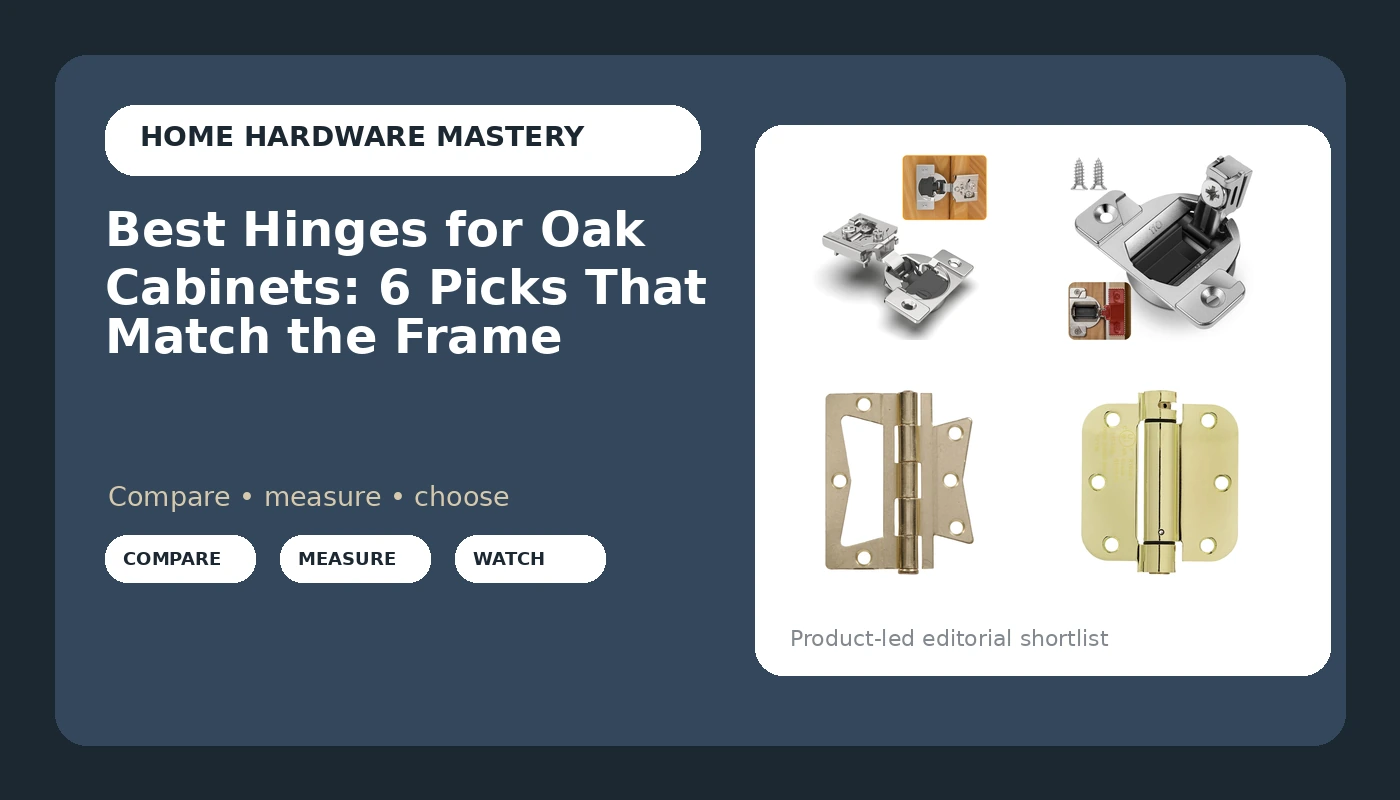
The six parts below split into two groups: two concealed cabinet hinges that mount to a face frame, and four door hinges that belong on a pantry, closet or utility door rather than on a cabinet front. That split is the first thing to settle. A 3.5-inch butt hinge will not hang a 3/4-inch oak cabinet door, no matter how well it is made.
Top pick
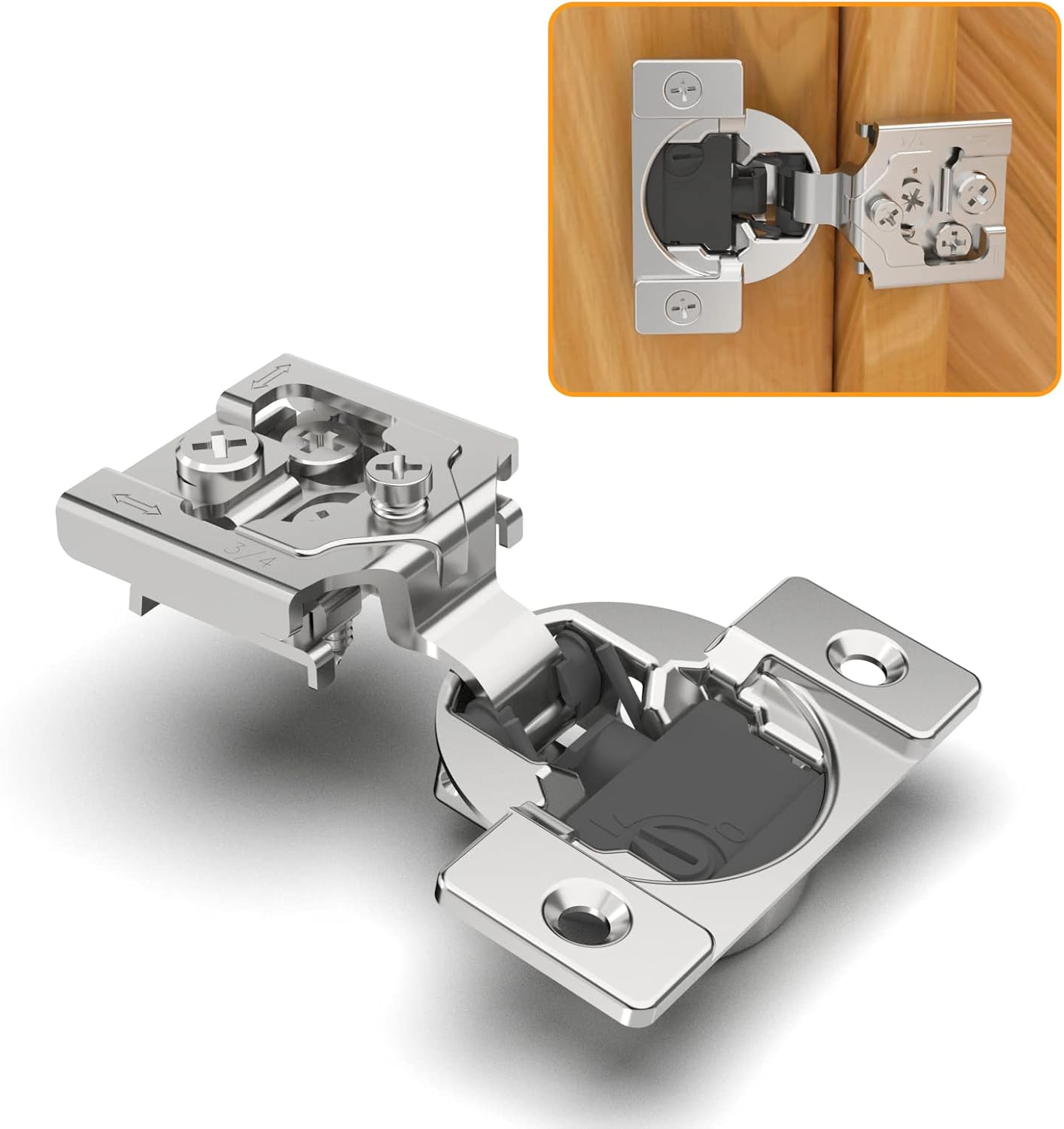
10 Pack 3/4" Overlay 4D Soft Close Concealed Hinges for Face Frame Door, Adjustable Closing Speed, Smooth Slow Self Close Hinges, Satin Nickel, 105° Open Angle Stainless Steel Cabinet Hinges
Ten face-frame concealed hinges with a 3/4-inch overlay, four-way adjustment, adjustable closing speed, a 105-degree open angle and a satin nickel finish. The soft-close damping and the four-way adjustment are what let a heavy oak door be quieted and trued after it is already hung.
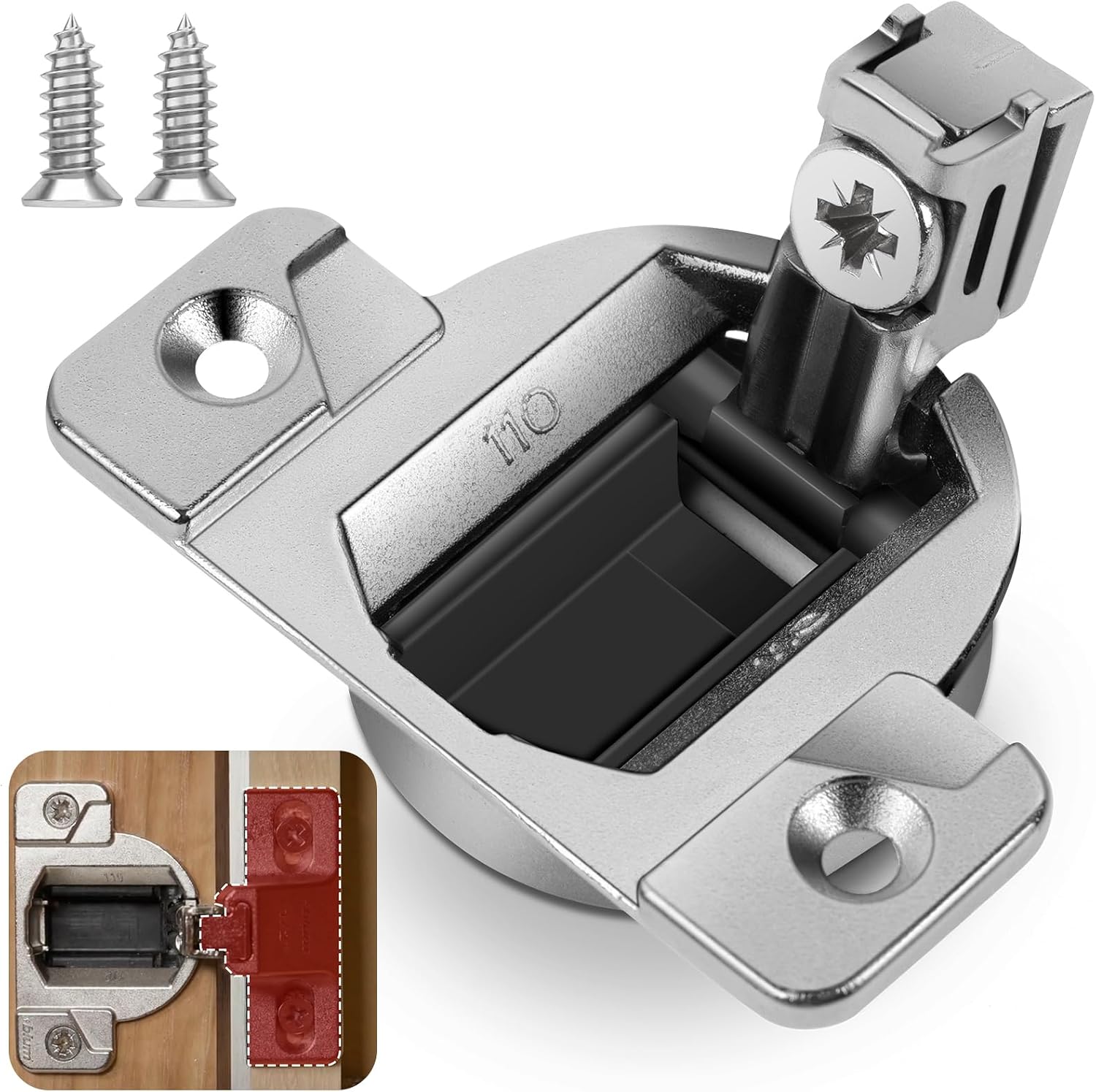
8 PCS Replacement for 30.310-11.02 Blum Cabinet Hinges, Self Quick Closing 110 & 120 Degree Screw On, 33.3600 Compact 31 & 33 Hinge (Mounting Plate Not Included) Include Wood Screws
Eight screw-on compact hinges listed as replacements for Blum 30.310-11.02 and 33.3600 series hinges, self quick closing, with wood screws included. Mounting plates are not in the box, so this suits a cabinet whose plates are already fitted and still sound.
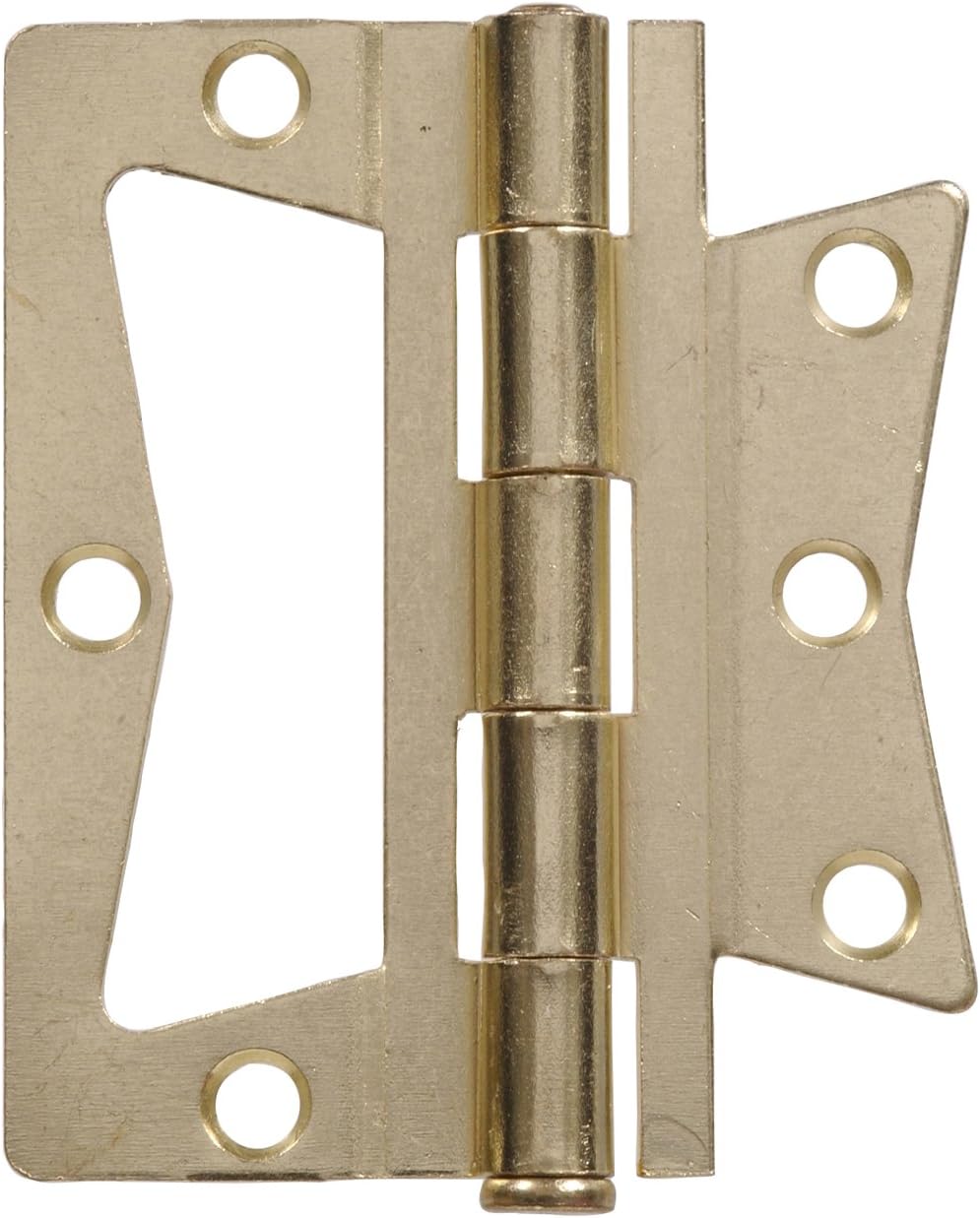
The Hillman Group 851272 3-Inch Non Mortise Hinge with Removable Pin, Brass Finish
A 3-inch non-mortise hinge with a removable pin in brass finish, sold as a single piece. Non-mortise means no leaf cutout is needed to hang it, which helps on a small oak door that is too thin to take a mortise and on any job where the pin has to come out without unscrewing the leaf.
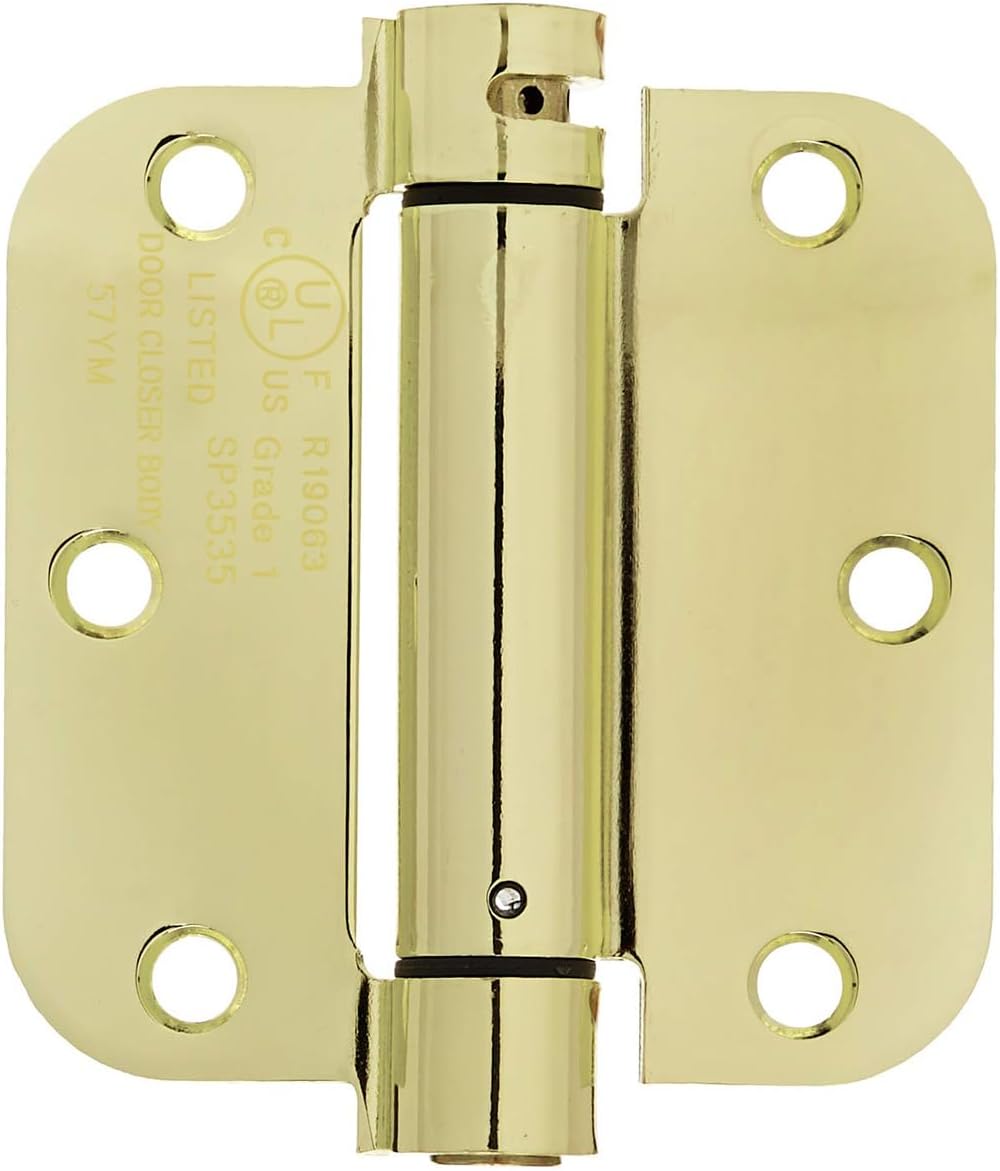
Amazon Basics Self-Closing Door Hinge, 3.5 Inch x 3.5 Inch, Polished Brass, 1-Piece, Hardware Included
One 3.5 x 3.5-inch self-closing door hinge in polished brass with hardware included. By size and by name this is an interior room-door hinge, so it belongs on a pantry or closet door, not on a cabinet front.
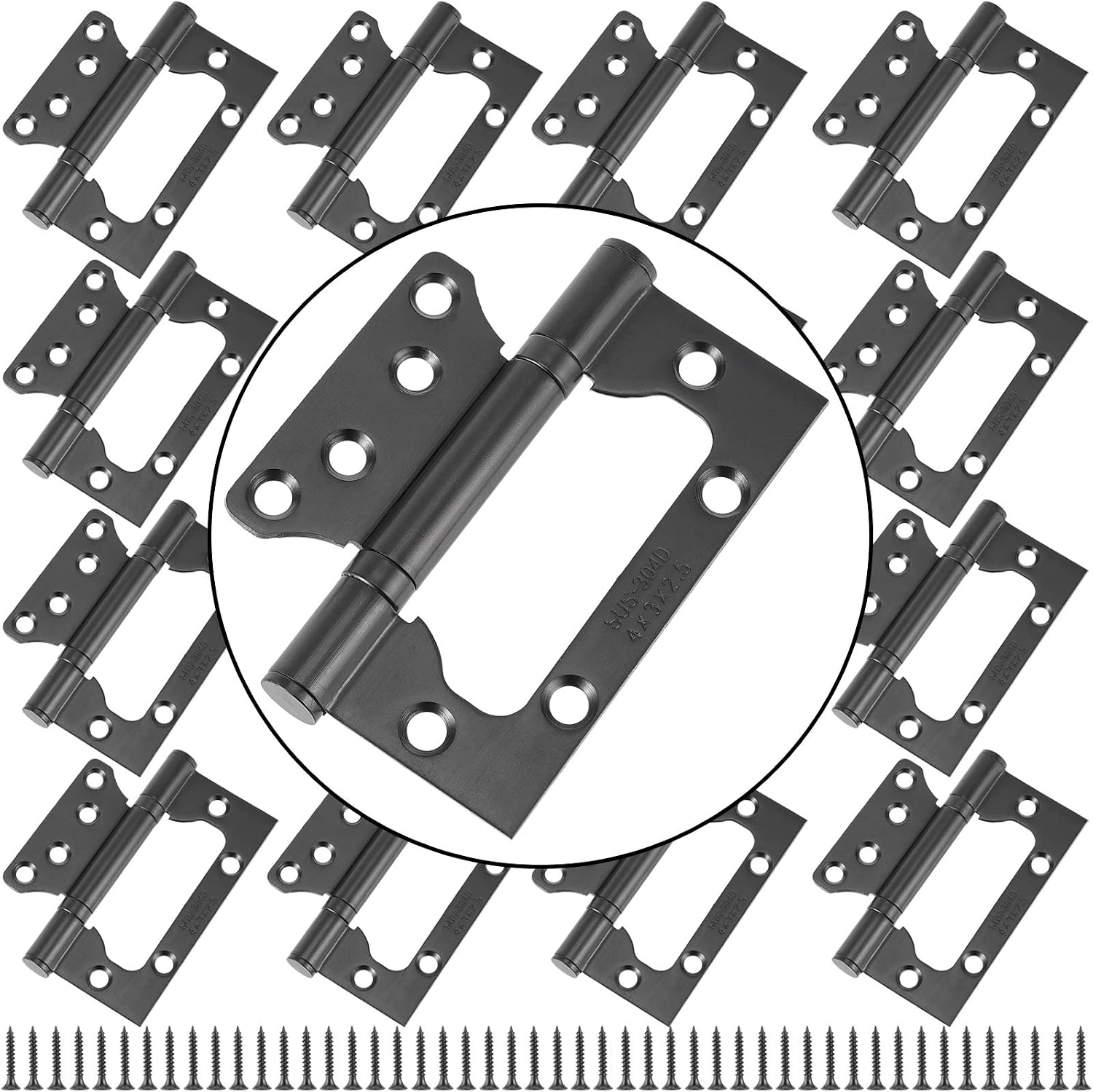
16 Pack 4 x 3 Inch Black Non Mortise Door Hinges, Heavy Duty Door Hinges, Stainless Steel Door Hinge with Mounting Screws, 8 Pairs
Sixteen 4 x 3-inch non-mortise door hinges in black, sold as eight pairs, listed as heavy duty stainless steel with mounting screws included. A quantity buy for a run of small doors where you want one matching finish across the whole set.
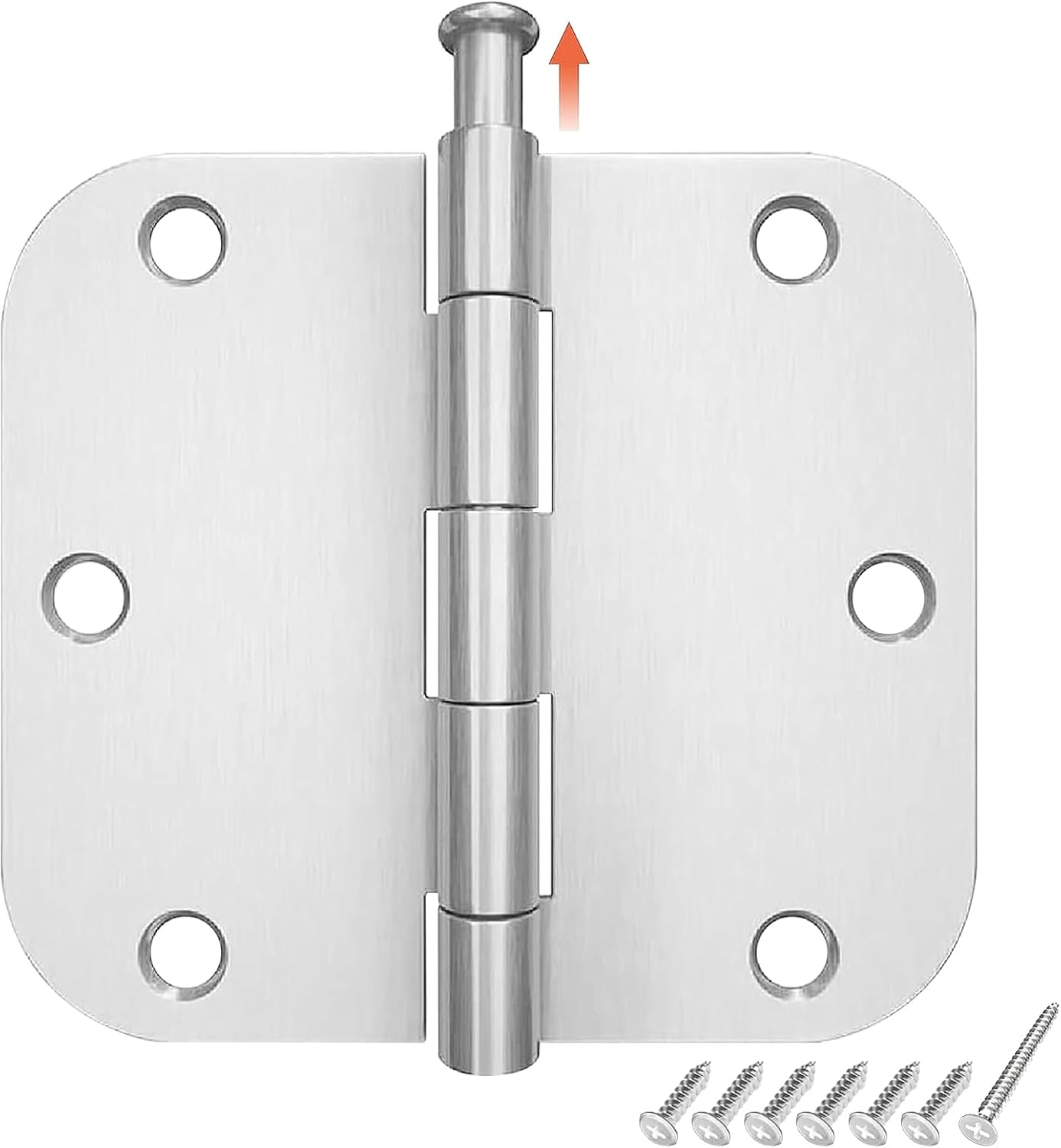
3 Pack Rounded Door Hinges Brushed Nickel 3.5 x 3.5 inch with 5/8 Radius Satin Nickel 3 1/2 Interior Door Hinges, Flat Iron Bifold Residential Standard 3 ½"x 3 ½" Silver Door Hardware
Three 3.5 x 3.5-inch door hinges in brushed nickel with a 5/8-inch radius, listed for interior, bifold and flat iron residential doors. The radius is the detail that decides the job: a rounded hinge will not seat in a mortise cut square, and a square hinge will not seat in a rounded one.
How these products were compared
Every card was compared on five things: mounting style (concealed cup, non-mortise, or a standard mortised butt hinge), the overlay or leaf size the listing states, the adjustment built into the part, the closing action, and what actually arrives in the box, including screws and whether a mounting plate is part of the deal.
Those five cover most of the ways an oak cabinet hinge disappoints. Mounting style decides whether the door can be adjusted at all after it is hung. Overlay decides whether the door covers the opening or binds against the door beside it. Adjustment decides whether a 3/4-inch oak door that has swelled since August can be brought back into line without moving screws. Closing action decides whether the door arrives with a bang. Box contents decide whether you are making a second trip.
This is a specification-based hinges comparison, not a bench test. No hinge here was cycle-tested, weighed, timed or installed by me, and no load or durability figure in this article comes from anywhere but the listing. Where a part is a room-door hinge rather than a cabinet hinge, that is stated plainly, because the fastest way to waste money in this category is to bolt a 3.5-inch butt hinge onto a cabinet front.
One note on hinges reviews: the useful ones name the specific part that gave out, the season it gave out in, and whether the screws or the hinge went first. Treat any hinges buying guide, this one included, as a filter that gets you to two or three candidates, then let the last decision come from measuring your own door.
How to choose hinges for oak cabinets
Start under the door and look at the frame. If a strip of oak roughly 3/4 inch to 1 inch wide runs around the opening, you have a face frame, and a concealed hinge needs a mounting plate that fastens to that strip. If the cabinet side is a single panel flush with the door, it is frameless, and the plate screws into the panel instead. Two different plates, two different hole patterns, and the single most common ordering mistake in this category.
Next, measure the overlay: how far the door edge extends past the edge of the opening. A 3/4-inch overlay hinge on a door drilled for a 1/2-inch overlay will push the door into its neighbour, and no amount of four-way adjustment will give you back the 1/4 inch you do not have. Measure the gap you want and the coverage you have before you read the rest of any listing.
Then decide whether you are building or replacing. If the existing plates are sound and the hinge bodies are tired, a replacement body that matches the plate series is the cheapest correct answer, and the Blum-compatible set above is exactly that case. If the plates are loose in the stile or the cup bore is wrong, you are replacing the whole hinge, plate included, and the 10-pack top pick is the simpler path.
Oak deserves its own paragraph. It is dense enough that a screw will shear before it sinks, and it splits if you drive a fastener into an undersized pilot hole. The failure that shows up in hinges reviews again and again is not a broken knuckle, it is a screw that has worn its hole oval in the stile after two heating seasons. Four-way adjustment buys you time here: you can move the door on the cam instead of chasing a bigger screw. Where the hole is already gone, see repairing a stripped hinge screw hole in a hardwood stile before you drill anything.
If you are new to this, the hinges for beginners version of the rule is short: match the mounting style first, then the overlay, then the finish, then the quantity. The rest of the hinges size guide you need is printed on the door itself. For a butt hinge, that is leaf length and width, plus the corner radius on an interior door. For a concealed hinge, it is the cup diameter and the overlay the listing states. Top rated hinges on a retail page usually means most reviewed, which is not the same as best suited to a heavy oak door with a 3/4-inch overlay, so read the spec line before the star line.
10 Pack 3/4" Overlay 4D Soft Close Concealed Hinges for Face Frame Door, Adjustable Closing Speed, Smooth Slow Self Close Hinges, Satin Nickel, 105° Open Angle Stainless Steel Cabinet Hinges
This is the pick because the listing answers the four questions an oak door asks. It is built for a face frame, which is what most oak cabinets have. It states a 3/4-inch overlay, which is the common coverage for a full-overlay kitchen door. It offers four-way adjustment, meaning the door can move up and down, in and out, and side to side on the hinge rather than on the screws. And the closing speed is adjustable, which is the feature that matters most on a solid oak door, because a 20-odd-pound door with no damping is a slammed door every time someone carries a plate.
The pack of ten is the practical unit for a kitchen, and the soft close is described as slow self close rather than damped only at the last inch, which is a distinction worth checking on any listing that uses the phrase. Satin nickel sits between brass and chrome and hides fingerprints better than either on a door that gets handled with flour on it.
Trade-offs, plainly. Ten hinges is five doors, so a two-door vanity leaves you with spares and a higher outlay than a two-pack would. The open angle is stated as 105 degrees, which is less than the 110 or 120 degrees some compact hinges offer, so a door that sits close to a perpendicular wall may not swing clear; check that before you commit. And the finish is one colour. If the rest of the kitchen is oil-rubbed bronze or brass, this is not the pack for you, and matching an existing finish matters more on visible hardware than on anything else in the cabinet.
Alternatives to consider
The 8 PCS Replacement for 30.310-11.02 Blum Cabinet Hinges is better suited to a repair where the plates are already on the frame and the hinge bodies are the worn part, since it includes wood screws but no mounting plates. Be honest about that omission before ordering: no plate means no install on a bare cabinet. The The Hillman Group 851272 3-Inch Non Mortise Hinge with Removable Pin fits the case where an oak door is too thin or too small for a cup bore and a surface-mounted hinge with a removable pin is the only sensible way to hang it, which comes up on spice racks, small appliance doors and built-in caddies.
The Amazon Basics Self-Closing Door Hinge, the 16 Pack 4 x 3 Inch Black Non Mortise Door Hinges and the 3 Pack Rounded Door Hinges Brushed Nickel cover the other half of an oak project: the room doors around it. The single polished brass hinge is a one-off for a pantry door that needs self-closing action. The black 16-pack is a quantity buy for a run of small doors in one finish. The brushed nickel three-pack is the one to pick when the mortise is already cut with a 5/8-inch radius, because the radius, not the finish, decides whether it drops in.
Day-to-day use and maintenance
A cabinet hinge needs very little. Wipe the knuckle and the cup with a damp cloth and dry it, especially in a kitchen where cooking grease and flour dust combine into a paste that stiffens the mechanism. Avoid soaking a concealed hinge or flushing it with solvent. If a hinge announces itself with a squeak, a dry film lubricant at the pivot points is the right answer; a heavy grease collects grit and turns into grinding compound on a door that swings twenty times a day.
Once a year, before the heating season, run a screwdriver over every hinge screw on the frame side. Snug, not torqued. Oak moves with humidity, and a screw that has backed out a quarter turn in October is the one that strips its hole by February. If an adjustable closing speed is fitted, set it with a light door in place rather than by feel with the door off. Follow the manufacturer's stated use for the part, and where a local code or the cabinet maker's specification governs an installation, ask the inspector or the maker rather than a blog.
Buying checklist
- Measure the door overlay and the frame width before choosing a mounting style.
- Confirm the plate hole spacing matches your existing cabinet, or plan to fill and redrill.
- Choose the overlay and cup size based on the door you have rather than an occasional edge case.
- Check that the exact model includes the mounting plate and the screws, not just the hinge body.
- Pick a finish that matches the other visible hardware before you pick a quantity.
- Verify the current retailer price, availability, and return terms before ordering a pack.
Final recommendation
Choose the 10 Pack 3/4" Overlay 4D Soft Close Concealed Hinges for Face Frame Door when you are hanging or replacing full-overlay doors on a face-frame oak kitchen or vanity and want soft close plus four-way adjustment in one purchase. Choose the 8 PCS Replacement for 30.310-11.02 Blum Cabinet Hinges when the plates are already on the cabinet and only the hinge bodies need to go. If the oak in your project is a pantry or closet door rather than a cabinet front, the butt hinges above are the right category, and the corner radius and leaf size are what you measure first.